

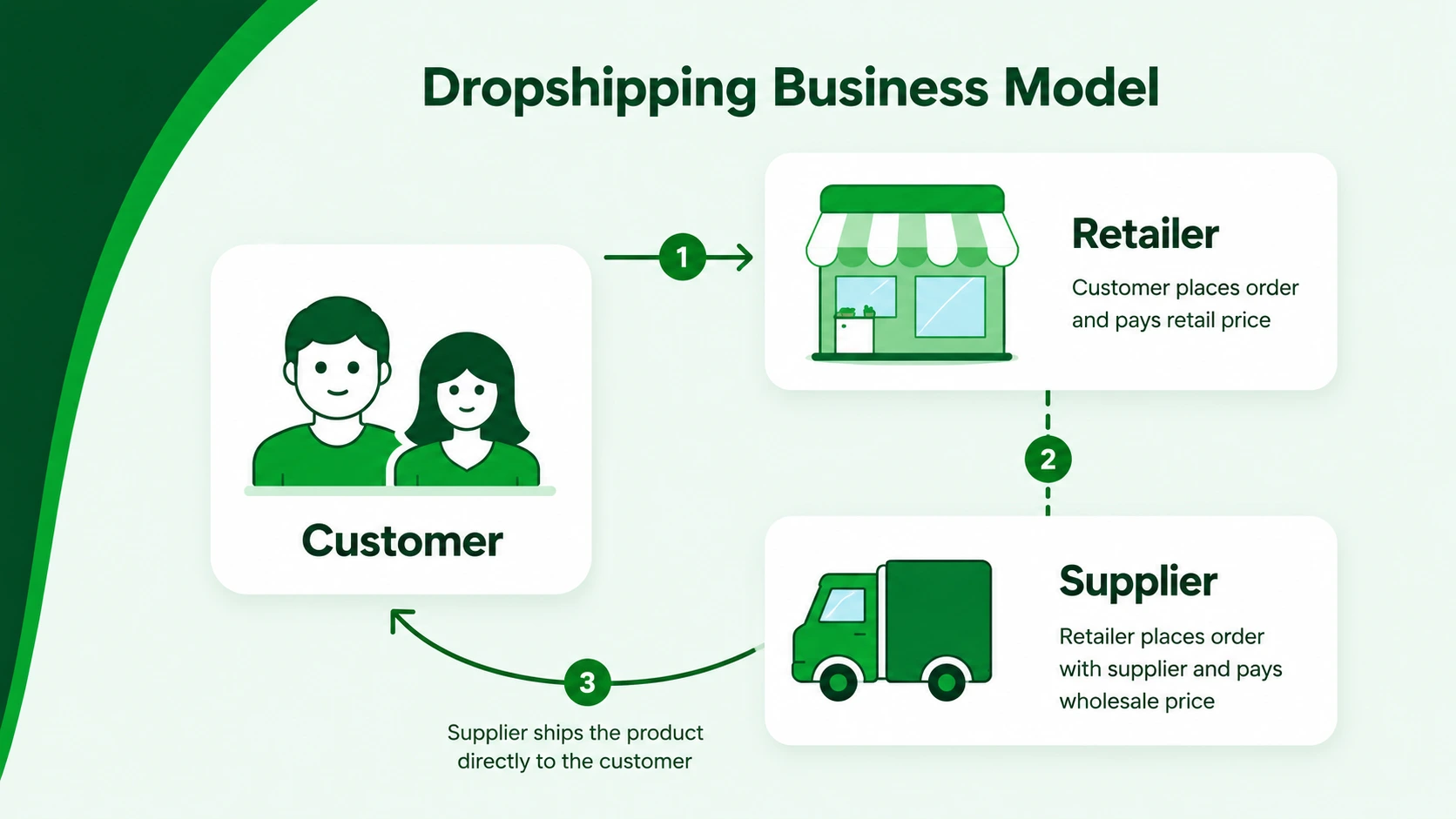
Starting a dropshipping business is appealing for all the right reasons — no upfront inventory, no warehouse, no packing boxes. But here's something most dropshipping guides skip over: the financial side is far more complex than the business model itself.
Every order you receive triggers a chain of financial transactions: a customer payment, a supplier cost, a platform fee, a payment processing charge, and often a portion of your advertising spend. None of these show up together in your Shopify dashboard or PayPal summary. And that's the problem.
Gross Sales ≠ Profit
Seeing $8,000 deposited from your online store does not mean you earned $8,000. After supplier payments, ad costs, platform fees, and processing charges, your actual profit could be a fraction of that — or zero. Without accurate bookkeeping, you won't know which.
Accurate bookkeeping is what separates dropshippers who grow sustainably from those who scale past their margins without realizing it. This guide covers everything you need to know: what dropshipping bookkeeping includes, where most owners go wrong, and how to keep your finances organized and tax-ready all year long.
Why Dropshipping Finances Work Differently
Traditional retail businesses buy inventory, store it, and sell it. The financial transactions are fairly straightforward. Dropshipping, by contrast, involves multiple parties in every single order — and each party creates a financial transaction you need to track.
What makes dropshipping bookkeeping unique?
In a dropshipping business, a single customer order triggers multiple financial events: a revenue transaction, a supplier payment, platform fees, payment gateway charges, and a share of advertising costs. All must be recorded separately to calculate your true profit margin — which ecommerce dashboards alone cannot do.
Consider a typical dropshipping transaction. A customer buys a $59 product from your store. Before you see any profit, the following has already happened:
The gross revenue from the sale — what shows up in your dashboard.
What you pay your supplier to fulfill the order — your largest direct expense.
Shopify, WooCommerce, or marketplace subscription and transaction fees.
Stripe, PayPal, or other gateway charges per transaction.
The portion of Google, Facebook, or TikTok ad spend that acquired this order.
Returned orders and disputed payments that reduce your effective revenue.
Your Ecommerce Platform Isn't a Bookkeeping System
Shopify, Stripe, and PayPal provide transaction data — but they won't combine all your costs, calculate profitability, produce tax-ready statements, or give you a real cash flow picture. That's what bookkeeping is for.
Are You Tracking All 6 Transaction Types in Every Order?
If you're relying on your payment gateway or Shopify reports for financial clarity, you're missing the full picture. Bizfyle builds a complete bookkeeping system tailored to how dropshipping finances actually work.
Supplier cost
tracking
Ad spend
categorization
Gateway
reconciliations
Monthly P&L
reports
What Is Dropshipping Bookkeeping?
Dropshipping bookkeeping is the process of recording, organizing, and maintaining every financial transaction related to your dropshipping business — giving you an accurate picture of revenue, costs, cash flow, and profitability over time.
Unlike a general view of "sales," proper bookkeeping captures every layer of your financial activity: what customers paid, what you paid suppliers, what the platforms and gateways charged, and what you spent to acquire each sale.

The questions accurate bookkeeping answers:
Not just orders processed — actual income after adjustments.
The two costs that usually determine whether a store is profitable.
Gross sales don't reveal margin — bookkeeping does.
Knowing how money moves in and out, not just total revenue.
Key Components of Dropshipping Bookkeeping
A well-maintained bookkeeping system captures every layer of financial activity in your business. Here's what that looks like in practice:
1. Sales Revenue
Record the total amount customers pay before deducting any fees or costs. Tracking gross sales helps you measure growth, compare monthly performance, identify top-selling products, and calculate accurate profit margins.
2. Supplier Payments (Cost of Goods Sold)
Every order your supplier fulfills is a business expense. Accurate supplier cost tracking lets you calculate your Cost of Goods Sold (COGS), measure per-product profitability, monitor purchasing trends, and make more informed pricing decisions.
3. Platform & Payment Processing Fees
Whether you sell on Shopify or WooCommerce, and process payments through Stripe or PayPal, every transaction carries fees. Recording these separately clarifies the true cost of each sale — and ensures they don't quietly erode your margins unnoticed.
4. Advertising & Marketing Expenses
Ad spend is often the single largest variable cost in a dropshipping business. Tracking campaigns across Google, Facebook, Instagram, and TikTok separately — and reconciling that spend against revenue — reveals whether your marketing is actually profitable or simply generating cash flow without real returns.
5. Other Business Operating Expenses
Beyond supplier costs and ads, most dropshipping stores carry a range of operating expenses: ecommerce apps, website hosting, email marketing tools, professional services, and administrative costs. Recording all of these ensures your financial statements reflect the complete cost of running your business.
Advertising Is Often Undertracked
Many dropshippers have a rough idea of their monthly ad spend but can't tie it accurately to revenue or cost per acquisition. Organized bookkeeping changes that — turning a vague expense into a measurable business metric.
What Your Real Profit Might Actually Look Like
Here's a concrete example that shows why bookkeeping matters more than your Shopify "total sales" figure. Imagine your store generates $15,000 in sales during a single month:
Monthly Dropshipping P&L — Example
Without accurate bookkeeping, that $15,000 can feel like a great month. With accurate bookkeeping, you know you made $4,650 — a 31% net margin — and you have the data to improve it: could you negotiate better supplier pricing? Is one ad platform performing better than another? Which products carry the highest margin?
These are the decisions accurate bookkeeping makes possible. Your dashboard can't make them for you.
Do You Know What Your Dropshipping Business Actually Made Last Month?
If you can't answer that with confidence, a few simple bookkeeping habits can change everything. Bizfyle helps you build the financial clarity to scale profitably.
Why Accurate Bookkeeping Matters as You Scale
Accurate bookkeeping gives you more than organized records — it provides the financial intelligence to grow your dropshipping business with confidence. The benefits compound as your order volume increases.
True Profit Visibility
Understand margin per product and per channel — not just total revenue.
Smarter Ad Decisions
Know whether your campaigns are generating profit or just generating orders.
Cash Flow Control
Understand exactly what's coming in, going out, and when.
Tax-Season Readiness
Organized year-round books mean no scramble when filing arrives.

Growth Needs Financial Data
Whether you're expanding to new products, testing new ad platforms, negotiating with suppliers, or exploring multiple storefronts, every decision benefits from reliable financial data. Bookkeeping isn't just an administrative function — it's a competitive advantage.
Why Dropshipping Business Owners Outsource Bookkeeping
Managing a dropshipping store already demands consistent attention — finding winning products, optimizing ad campaigns, managing customer service, and monitoring supplier performance. As order volume grows, so does the financial complexity.
More orders mean more supplier invoices, more gateway transactions, more advertising line items, more refunds, and more tax obligations to track. Keeping up with all of it manually can take hours every week — hours that would be better spent on the parts of the business only you can handle.
| Feature | Managing It Yourself | Outsourced Bookkeeping (Bizfyle) |
|---|---|---|
| Time Required | Several hours weekly | Minimal owner involvement |
| Accuracy | Higher risk of missed transactions | Systematic, consistent recording |
| Financial Reports | Often delayed or incomplete | Monthly reports, delivered reliably |
| Tax Readiness | Year-end rush common | Books organized year-round |
| Scalability | Harder to keep up with growth | Scales with your order volume |
| Ad Spend Tracking | Often lumped together or missed | Properly categorized by channel |
| Supplier Cost (COGS) | Frequently undertracked | Accurately recorded per period |
Outsourcing Isn't Losing Control
Working with a professional bookkeeper doesn't mean handing over your business finances and hoping for the best. It means having accurate, up-to-date records and reliable monthly reports — so you're always in control with better information than before.
Free Up Your Time. Keep Your Numbers Accurate.
Bizfyle handles your monthly bookkeeping — supplier costs, gateway reconciliations, ad expense tracking, and tax-ready reports — so you can focus on finding winning products and scaling campaigns.
📞 Get a Free ConsultationHow Bizfyle Supports Dropshipping Businesses
At Bizfyle, we work with ecommerce and dropshipping businesses regularly. We understand that your finances don't fit neatly into a simple bookkeeping template — and we've built our services to match how dropshipping businesses actually operate.
Every order and supplier payment accurately logged and categorized.
Stripe, PayPal, and Shopify Payments deposits matched to your records monthly.
Google, Facebook, TikTok, and Instagram campaigns recorded separately.
P&L, balance sheet, and cash flow statement — delivered on schedule.
Organized records throughout the year make filing straightforward, not stressful.
Whether you're running one store or multiple brands, we scale with you.
One Team for Your Entire Financial Picture
From your first order to your hundredth supplier relationship, Bizfyle keeps your financial records accurate, organized, and ready for whatever comes next — whether that's tax season, a loan application, or your next growth milestone.
Frequently Asked Questions
Yes. Bookkeeping helps you accurately track sales, supplier costs, operating expenses, and profitability while keeping your financial records organized for tax preparation and business planning. Without it, it's difficult to know whether your store is actually profitable.
No. Platforms like Shopify, Stripe, and PayPal provide transaction data, but they don't replace a complete bookkeeping system. Proper bookkeeping combines all your financial information — including supplier costs, ad spend, and fees — to produce accurate financial reports and prepare you for tax season.
Weekly or monthly updates are recommended. Regular updates prevent errors from accumulating, improve cash flow visibility, and make year-end tax preparation significantly easier and less expensive.
Advertising is often the largest variable cost in a dropshipping business. Accurately tracking these costs — by platform and campaign where possible — helps you measure campaign performance, calculate your real cost per acquisition, and determine whether your marketing is generating profitable returns or simply generating revenue.
At minimum: a Profit and Loss Statement (to see revenue vs. expenses and net profit), a Cash Flow Statement (to understand cash position and upcoming obligations), and a Balance Sheet (to see the overall financial state of the business). These three reports together give you a complete picture of financial performance.
Yes. Bizfyle provides bookkeeping services tailored to ecommerce and dropshipping businesses — including sales recording, supplier cost tracking, gateway reconciliations, ad expense categorization, and monthly financial reporting. Our goal is to give dropshipping owners accurate, organized books and the financial clarity to grow with confidence.
Success in Dropshipping Is Measured in Margins, Not Just Orders

A high-revenue dropshipping store and a profitable one are not always the same thing. Success isn't measured by how many orders you process — it's measured by how much you actually keep after every supplier cost, ad campaign, platform fee, and tax obligation is accounted for.
Accurate bookkeeping is what gives you that clarity. It tells you which products are worth scaling, which ad campaigns are generating real returns, where your costs are growing, and whether your business is as healthy as your dashboard suggests.
Build a Business You Can Scale Confidently
At Bizfyle, we help dropshipping businesses maintain accurate, organized, and tax-ready books — giving owners the financial clarity to make smarter decisions, control costs, and grow with confidence. From recording daily transactions to preparing monthly reports, our team works as an extension of your business.